
A cottage garden is a style of gardening that seeks to create the charm and coziness of a country cottage. They are typically filled with colourful wildflowers, herbs, vegetables, and fruit trees, creating a lush and relaxing area. They lack the formal planning of more modern English gardens, as there really are no rules. You can add plants wherever you have a space and pack them as tightly as you wish. Cottage gardens are also known for their imaginative use of space, incorporating trellises, fences, and containers to maximize the planting area. If you would like to create your own cottage garden, here are some tips and ideas to help you get started.
Planning Your Cottage Garden
Even though a cottage garden isn’t planned in the same organised way as a more normal modern garden with its patio, lawn, vegetable patch and borders, you still need to have an idea of what you are trying to create. You may wish to consider the following things before you start.
- Will the cottage garden take up your entire garden or just a small area within it. If it is just going to be a part of it where is the best location.
- What features do you already have that can be incorporated into your garden. You may have an old wall that you can grow climbing plants up or a garden pond that could be a focal point of the garden.
- Do you want to add any new features such as a pergola or even a greenhouse where you could grow your own flowers.
- Would you like a relaxing area for sitting in during the summer evenings. Often this could be a very private spot with lots of cover perhaps under trees.
- Decide the route of the path from your house down through your garden. A winding path looks much better than a straight A to B one from top to bottom of the garden.
- Will you include a lawn within your garden. Historically it would be unusual but there’s no rule that says you can’t. The amount of space you have available may well be the decisive factor.
- What types of natural materials would you like to use to enhance the look of your garden. Brick, stone and wood can all be used to make paths, edging, walls or structures.
- Is your garden going to be all on one level or will you make use of steps to take you from one area to another.
- Are you going to plant directly into the ground or make use of pots, containers or barrels to add some variety and flexibility into your garden. Using items like this can be helpful as it gives you the ability to rearrange them easily if you decide they would look better elsewhere.
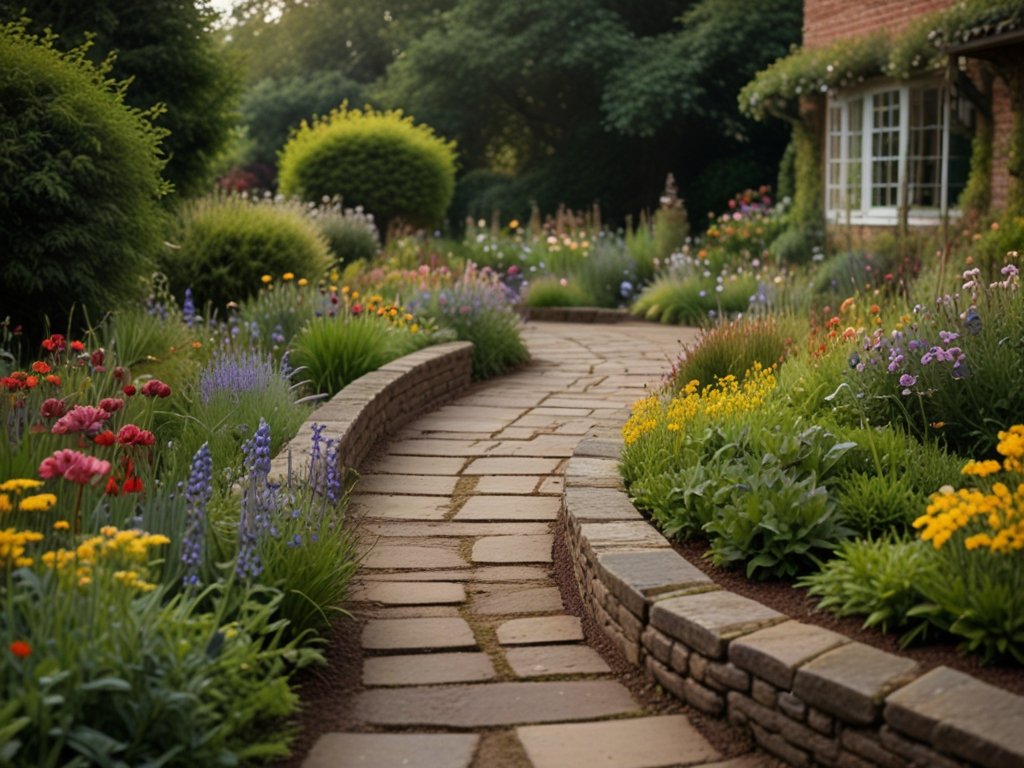
Once you have a vision of how your cottage garden should look like you can start to prepare the areas where you will be planting. This is likely to be nearly everywhere other than pathways, water features and existing trees. Even under trees can be planted with flowers that thrive in full shade. The next step is to decide what you intend to plant in each area and prepare your soil.
Preparing Your Soil.
A good place to start is to purchase a soil testing kit so you can find out the pH of your soil. It is a test which is a measurement of whether your soil is acidic, neutral or alkaline. This will tell you what sort of plants will find the conditions of your garden ideal. Once you know this you can choose to do two things.
- Choose plants that are well suited to your soil, or
- Amend your soil to make it more suitable for the plants you intend to grow. You can do this by adding lime to it if you wish to make it less acidic or sulphur if you want it to be more so.
You can also improve your soil by adding organic matter such as compost or manure to improve its fertility and texture. Now you are ready to start planting.
Choose Your Plants.
Select the plants that suit your climate, site, and taste. Cottage gardens are known for their diversity and abundance of flowers, herbs, vegetables, and fruit trees. You can mix and match different types of plants in any combination that suits you. Before you decide on which plants to purchase you should consider the following-
- A wide variety of colours, shapes and heights will make your garden look much better than just one or two similar looking species.
- Looks aren’t the only factor to consider, as the scents and smells of your garden will all help make it a special place so why not include some very fragrant flowers.
- A cottage garden should be a very natural environment that can encourage a variety of wildlife. You may want to choose flowers or shrubs that are known to attract bees, butterflies or dragonflies to your garden.
- Plants have different times of spring and summer to flower so choose a range of both early and late flowering shrubs and flowers, to ensure your garden looks great for as long as possible. Planting early flowering bulbs like Daffodils and Crocus can extend the time your garden is colourful even longer.
- Do you wish your garden to be low maintenance. If so, you may wish to choose longer lasting hardy shrubs or flowers that are self-seeding which should return next year.
- Do you intend to plant fruit or vegetables in your garden. In the past you would expect to find apple, plum or cherry trees as well as berries such as strawberries, raspberries and blackcurrants. Vegetables such as onions, cabbages, carrots, swedes and leeks would also have been commonly grown but you are free to choose whatever you would like to grow. Most of us will probably choose our favourites to eat!
Once you have considered all the factors you are ready to decide on specific types of flowers some of which will be climbers as well as shrubs and possibly herbs, fruits, berries and vegetables.
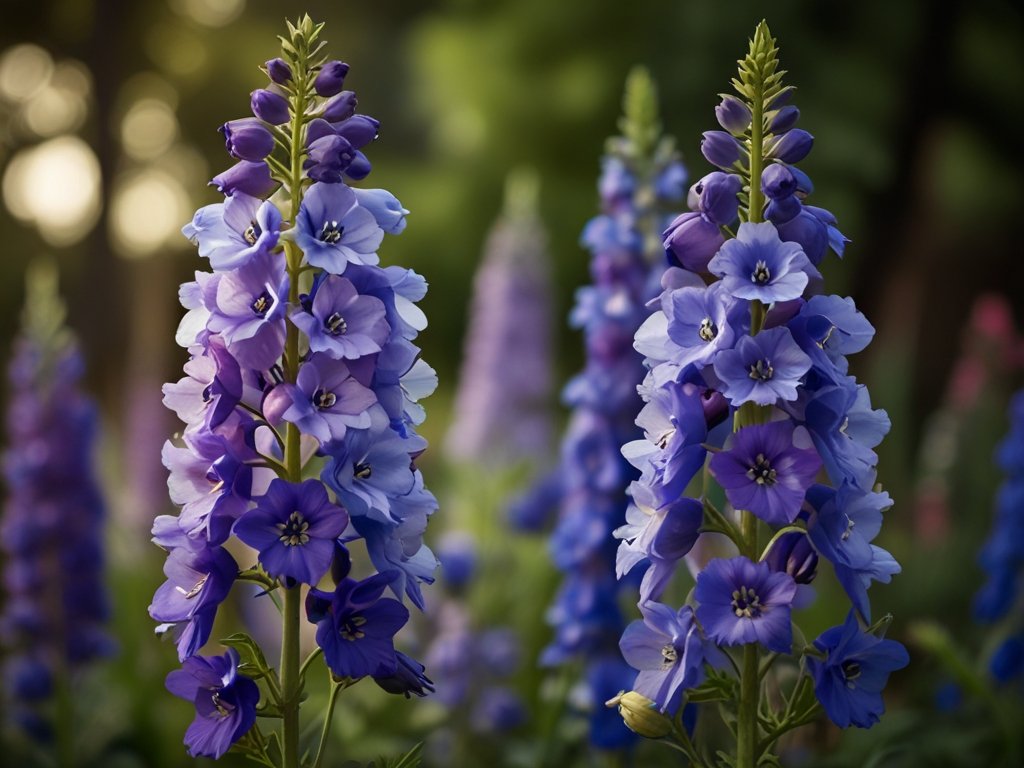
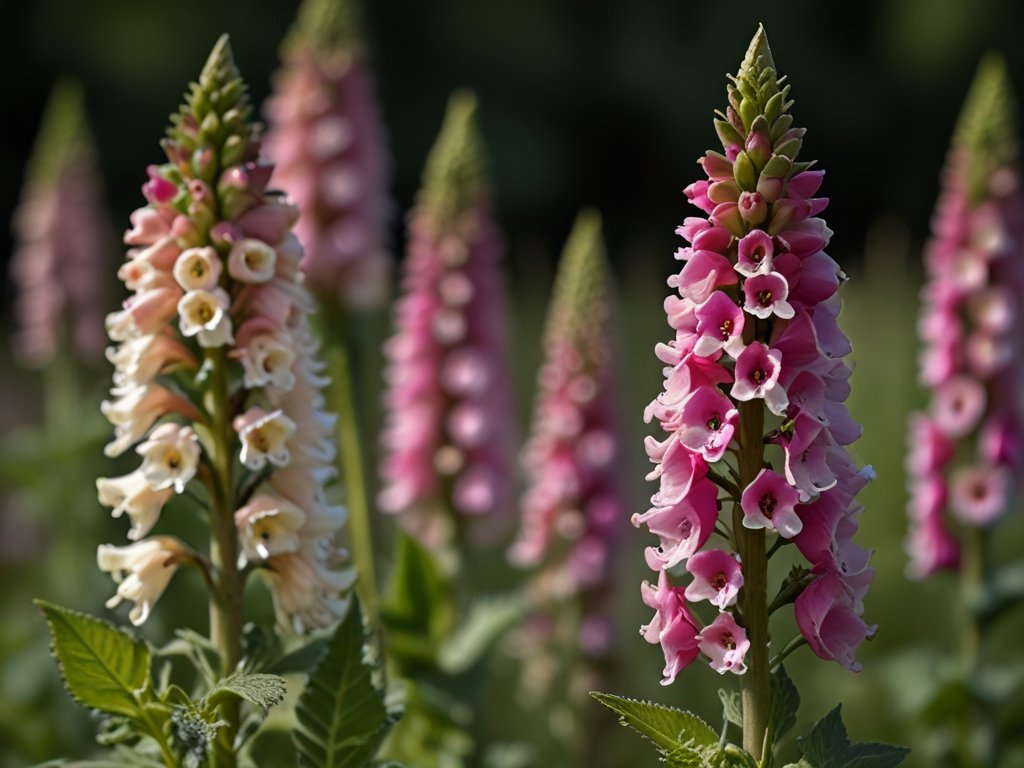
- Flowers. The first name that people associate with an English cottage garden would be roses, but other commonly chosen ones include marigolds, geraniums, hollyhocks, foxgloves, delphiniums, daisies, sunflowers and poppies.
- Climbing flowers. Once again you could choose a variety of climbing roses, but clematis, wisteria or honeysuckle would all be at home in a cottage garden.
- Herbs. If you wish to plant some herbs you could choose sage, thyme, mint, oregano, chives or basil.
- Shrubs. Buddleias are worth considering for their ability to attract butterflies and bees, but you might also consider lilac for its fragrant blooms, forsythia for its early spring yellow flowers or fuchsias for their pendulous bright flowers. Lavender is another traditional choice, but the list is endless and its worth spending time researching to find the choices that are perfect for you.
How And When to Plant.
Arrange the plants in an informal and natural way, avoiding straight lines and geometric patterns. You can group plants by colour, height, the time of year they bloom or create contrast and interest with different shapes, textures, and sizes. You can also use vertical elements, such as trellises, fences, or poles, to support the climbing plants.
The best time to start planting is spring once the ground as started to warm up but in practice you will probably be gradually planting things over an extended period especially if you intend to grow seasonal vegetables. Your choice of flowers and shrubs will affect your ongoing planting.
Conclusion.
To create a cottage garden, you will have chosen a wide variety of plants, some for their colours and fragrances, some to encourage wildlife and some because they taste good. Mixing these flowers, herbs, vegetables, and fruits in whatever combinations you like will create a colourful and productive garden. It will also be a haven for various types of wildlife and a place where you can relax in and enjoy for hour after hour. The planning and building of such a wonderful natural space should be part of the fun. Happy gardening.