
Are you looking for a way to improve your health and well-being? Are you an active gardener? If so growing your own fruits and vegetables could be a rewarding and satisfying hobby, as well as a source of fresh and nutritious food. However, not all fruits and vegetables are created equal when it comes to their health benefits. Some have more vitamins, minerals, antioxidants, and phytochemicals than others, and can help prevent or treat various diseases and conditions. In this article, we will introduce you to the 10 healthiest fruits and vegetables that you can grow in the UK and give you some tips on how to grow them successfully. You don’t need a large garden to grow these healthy foods so anyone can enjoy these superfoods and improve their health and happiness.
Apple
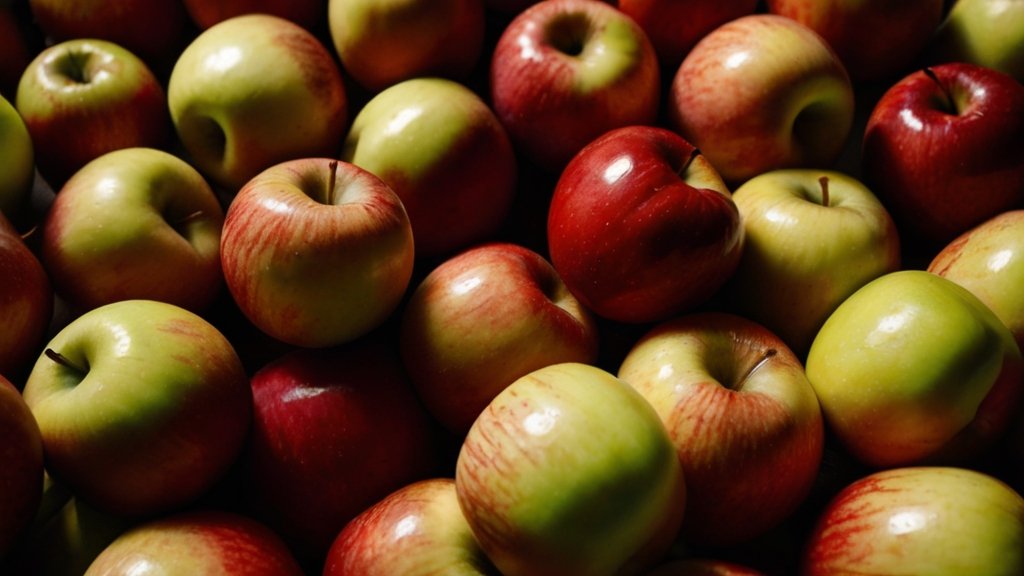
Apples are a very healthy fruit that are packed with vitamins and nutrients. Most people will be familiar with the old saying “An apple a day keeps the doctor away” and a regular apple is certainly good for your health. Apples contain Vitamin C, Vitamin E, zinc and iron as well as polyphenols. The benefits of eating an apple regularly include the following –
- It can lower blood pressure.
- Can help with controlling blood sugars.
- Apples act as an antioxidant which can reduce the risk of certain diseases.
- Apples also act as an anti-inflammatory.
To get the full benefits from eating apples you should eat them regularly and with the peel on.
You don’t need a lot of space to grow apples as there are options for those of us who have limited space. Using a method that involves grafting an apple tree onto a rootstock you will create a tree that is much more compact and can even be grown in a pot or container. The smallest trees are less than a metre in height. They can also be shaped in a variety of ways. Starline apples grow off a single stem that easily fits into a garden border or a pot and produces a good crop of tasty apples but there are plenty of varieties to choose from.
Growing apples is easy and established trees don’t normally even need watering, but a new tree should be watered regularly as should a tree that is being grown in a container.
Beetroot
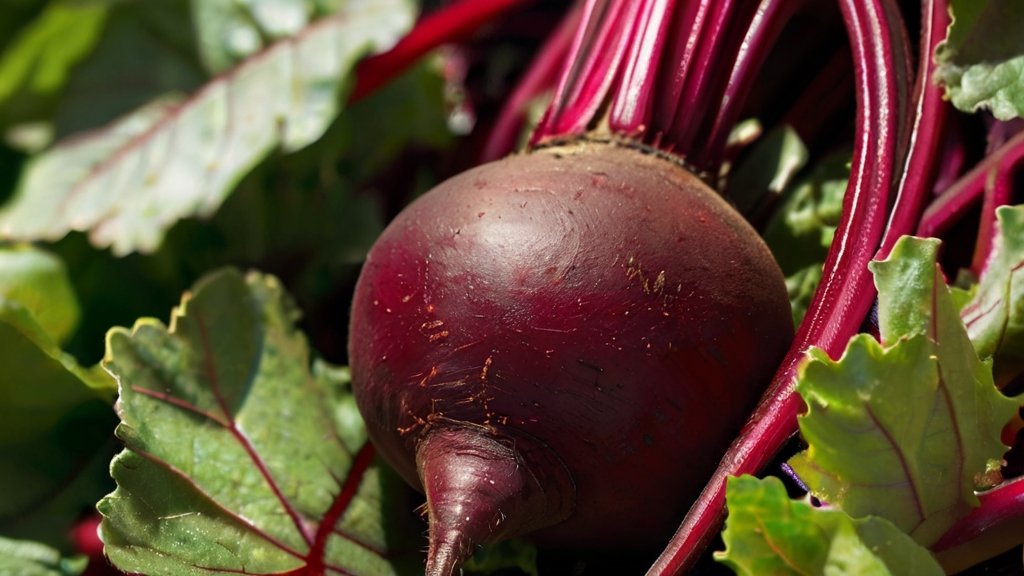
Recently beetroot seems to be getting included in more and more lists of superfoods and with good reason. This delicious root vegetable is a great source of fibre and contains folate, potassium, iron and Vitamin C. The green leafy tops can also be eaten and are a good source of beta-carotene. Benefits of eating beetroots include-
- Beetroot contains a lot of antioxidants that can protect against a range of diseases.
- Beetroot has anti-inflammatory properties.
- It can help lower blood pressure.
- The high fibre content may help digestion.
- May have anti-cancer properties.
Beetroot is fairly easy to grow in most types of soil, but they will do better in a well fertilized garden so dig in compost before planting. Seeds can be planted at a depth of 1cm from March onwards. There is usually around two to three months between planting and harvesting so you may consider planting in stages to ensure a longer harvesting time. Once planted water regularly and keep the ground free of weeds. Harvest them before they get too large as they will be sweeter and more tender.
You can eat them raw, boiled or pickled. In my opinion boiled is by far the best way and I would never pickle them! Far too delicious for that.
Blueberries
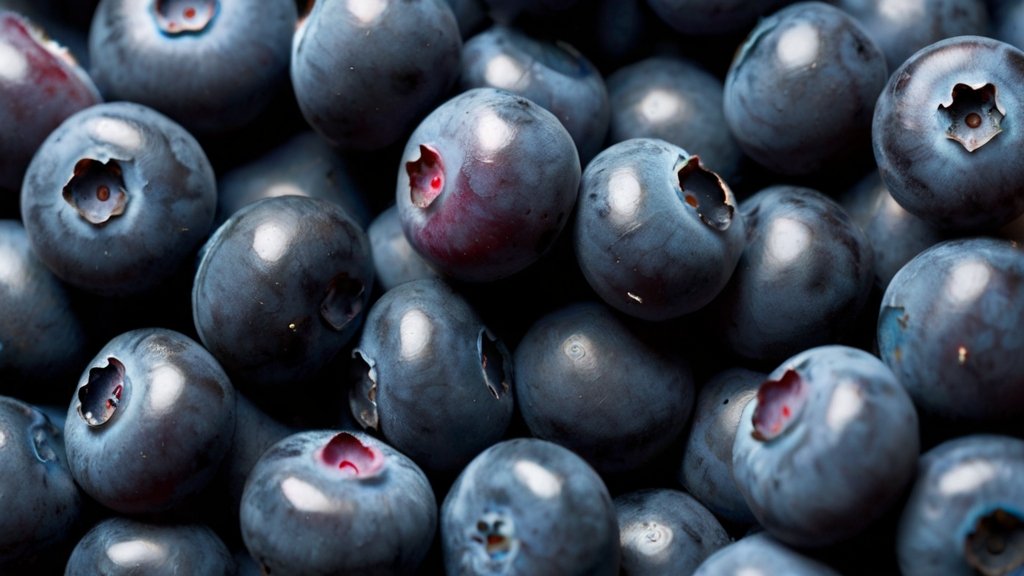
These little purple or blue berries are a well-known superfood that are full of vitamins and nutrients. They contain manganese, potassium, vitamin C and vitamin K as well as being a good source of fibre. They also have many types of flavonoids which are full of antioxidants. Blueberries may have the following benefits-
- Vitamin K helps protect the heart, bones and natural clotting of the blood.
- High levels of antioxidants may help protect against diseases.
- The fibre will help digestion.
- Some studies have shown that they help control blood sugar levels.
- Eating blueberries regularly will help lower blood pressure.
Blueberries come from a compact bush that grows to around a metre high. They are not hard to grow so long as you have acidic soil. They thrive in a position where they get a lot of sun. If you don’t have acidic soil, you can still grow blueberries from a pot that you should fill with an ericaceous compost. They should be watered regularly with rainwater.
Blueberries can be eaten as a snack, made into a snack or scattered over your morning cereal or porridge. They are wonderful whichever way you choose.
Broccoli
Broccoli is a green vegetable from the cabbage family that has many vitamins and nutrients. Broccoli makes frequent appearances on lists of superfoods. It has large amounts of Vitamin C and Vitamin K as well as smaller levels of several types of vitamin B. It also contains minerals such as Phosphorous, Potassium, Manganese and Selenium. As such eating broccoli may have the following benefits-
- Its high level of antioxidants may reduce inflammation.
- The Vitamin K may protect your heart and strengthen your bones.
- The Vitamin C should boost your immune system.
- Broccoli is rich in fibre which can help digestion and bowel function.
- It may help control your blood sugars.
- Broccoli contains lutein and zeaxanthin which are important in protecting the health of your eyes.
To grow broccoli, you can sow the seeds inside and then transplant them later when the seedlings are around 10cm high or wait until after the last frosts and sow the seeds directly into the ground. They grow best in well-fertilized and well-drained nonacidic soil and like plenty of sun. If you have sown directly into the ground, you will have to protect the plants from slugs and snails which can soon devour them and I prefer to grow them indoors until they are stronger and more resilient. Broccoli can take up to three months to grow but some varieties grow faster if you require them.
You can eat broccoli raw but it’s usually boiled or steamed. Of the two I would recommend you steam it as that will maintain a higher percentage of its nutrients.
Carrots
One of the first things I can remember about food is being told you must eat your carrots as they will help you see in the dark. There is some truth in this but that’s not the only reason you should eat plenty of this tasty vegetable. They have large amounts of Vitamin A along with lower levels of Vitamins B6, C and K. Carrots also contain minerals such as potassium, manganese and phosphorus. Eating carrots regularly could have these benefits-
- Vitamin A can help maintain your night vision and healthy skin.
- Its Vitamin K may improve your bone strength.
- The potassium may help lower blood pressure.
- Carrots have manganese which is necessary for normal brain function.
- Vitamin C may help protect your immune system.
Carrots can be sown from seeds from any time after April and they take between three and four months before they are ready to harvest. Varieties differ so check on the packet. Carrots like a lot of sun and well-drained soil. They don’t like heavy clay and if you are in that situation, you should consider growing them from a container where you can give them more suitable soil. Carrots do not need much watering apart from long dry spells and all you need to do is keep the area free from weeds. The simplest way to know when to harvest is just to pick a few carrots and see.
Carrots are a versatile food that can be eaten raw or boiled, steamed or roasted. From a nutritional perspective, it’s better to eat them raw or steam them. If you do boil them you should do so when they are whole.

Kale
Kale is a leafy vegetable of the cabbage family that has either green or purple leaves. It has grown in popularity in recent years as its outstanding health benefits have been publicised. It has a list of nutrients that is second to none including large amounts of Vitamin K, C and A along with lower levels of B1, B2 and B6. It also has plenty of folate and various minerals. Regular consumption of kale can benefit you in the following ways-
- High levels of Vitamin K will help maintain healthy bones.
- The Vitamin C will help your immune system.
- It has plenty of antioxidants that may help to prevent diseases including cancer.
- Studies have shown that it may lower cholesterol levels.
- It contains lutein and zeaxanthin which is shown to benefit eye health.
- Kale contains folate which is necessary for maintaining healthy cells.
Kale can be sown from March onwards. It is often started in a seed bed and the plants are transplanted later but you can just sow directly. It will grow in most soil types and likes a lot of sunlight. Use a nitrogen-based fertilizer before you plant and then keep weed-free afterwards. It should be ready to harvest between 8 and 10 weeks after planting.
Young leaves can be eaten raw in salads. You can also boil, steam it or even blend it and use it in a smoothie.
Spinach
Spinach is a green-leaved plant that for those of us from a certain generation will be forever linked to the cartoon character Popeye who always ate spinach to give him his strength. It does contain plenty of Iron as well as Calcium, Potassium, Magnesium and Manganese but it also has very high levels of Vitamin K as well as plenty of Vitamin A, C, B2 and B6. There are plenty of benefits from adding spinach to your diet including-
- Stronger bones and normal blood clotting from the Vitamin K.
- An improved immune system from the Vitamin C.
- Maintaining healthy eyesight due to the beta carotene, lutein and zeaxanthin.
- Healthy red cell production from folate.
- High levels of antioxidants to help prevent diseases.
- A source of fibre to aid your digestion.
Spinach seeds can be grown from March onwards either directly in the garden or in containers and it likes moist well-drained soil. Fertilize the ground before planting and keep it free of weeds and well-watered. It’s a fast-growing plant that doesn’t like very hot weather so Spring sown plants can be harvested before the Summer heat. You can also sow in late Summer or early Autumn for a late Autumn harvest.
Like other green-leaved vegetables, you can eat spinach raw, boil or steam it. As with kale it can also be used in a smoothie. Whichever way you choose it’s a tasty and healthy vegetable to eat.
Garlic
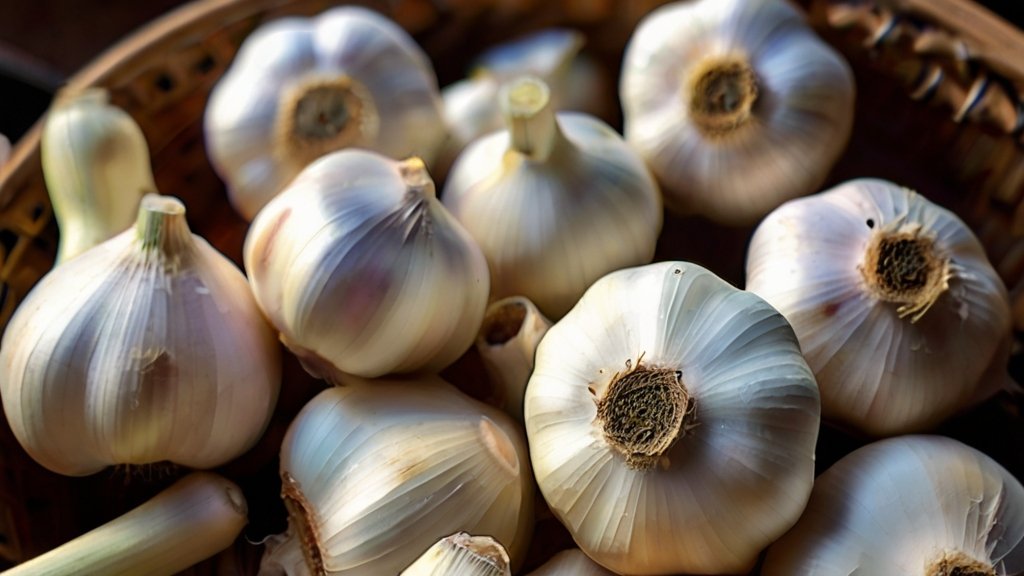
Even though garlic is more often used to flavour food it is actually a vegetable and one that is packed with nutrients and vitamins. It contains various B vitamins as well as Vitamin C and minerals that include Calcium, Iron, Phosphorus, Potassium and Zinc. It is worth noting that whilst garlic is a healthy vegetable it is not eaten in large enough quantities to gain the full health benefits. Even so, it may-
- Help lower blood pressure.
- It has a high level of vitamin B6 may protect the brain and nervous system.
- It may help regulate cholesterol levels.
- Garlic contains allicin which could protect against diseases.
- Eating garlic may also protect or reduce symptoms of a common cold.
It is easy to grow garlic and takes up little space so you can do it with even the smallest garden. You plant garlic cloves in the Autumn and they will be harvested the following Summer. Plant garlic in well-drained soil and keep it free from weeds, watering in any dry spells.
Garlic is usually roasted, sauteed or baked before being added to food as a flavouring but it can be eaten raw. There is some evidence that the health benefits are stronger when eaten raw, but it may also be unsuitable for people with some health conditions.
Strawberries
Strawberries and cream are one of the food highlights of a British Summer. These red berries are grown worldwide and can now be consumed all year round but, in my opinion, none of the imported varieties come close to matching the homegrown ones. They are a great source of Vitamin C and contain a variety of minerals so are both healthy and tasty. Potential benefits from eating strawberries include-
- The high levels of Vitamin C will help protect your immune system.
- They may help lower blood pressure.
- Strawberries contain manganese that can help regulate blood sugars.
- They may reduce inflammation.
- The antioxidants may help to protect against disease.
You can grow Strawberries in pots, in a greenhouse or your garden. You should plant them in Spring or Autumn in a well-drained area that gets plenty of sun. You should fertilise before planting and water regularly until the plants establish themselves. They can continue to produce fruit for several years, but the amounts may decrease over time and it’s advisable to replace them every three years.
Strawberries are usually associated with cream, but they are sweet enough to eat by themselves and there are healthier alternatives to accompany them with like low-fat yoghurt if you are particularly diet conscious.
Brussels Sprouts
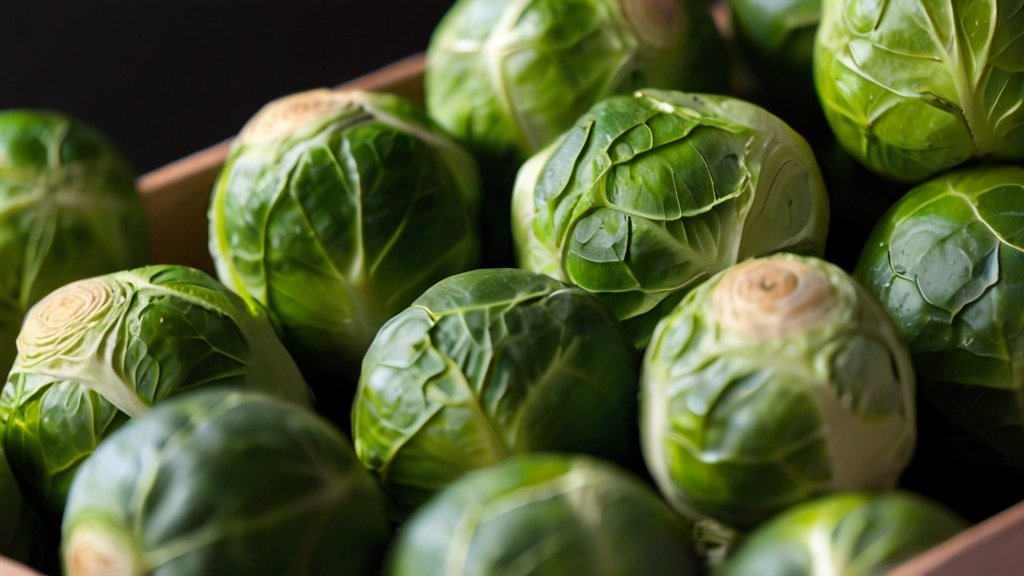
Everyone’s favourite Christmas vegetable (well maybe not!) the Brussels sprout is from the cabbage family which is grown for the small round buds. These strong tasting vegetables have very high levels of vitamin C and vitamin K as well as a range of minerals including iron, manganese, phosphorus and potassium. Health benefits from eating them may include-
- High levels of antioxidants may help protect from disease.
- It contains large amounts of vitamin K which strengthens bones and helps natural blood clotting.
- High fibre content aids digestion and may even prevent heart disease.
- Sprouts contain lots of vitamin C for an improved immune system.
- Studies have shown that they may reduce the risk of diabetes.
- A reduction in inflammation.
Growing sprouts isn’t hard but they do take a lot of time to reach harvesting. Seed in late winter/early spring ready for them to be planted out after the last frosts in May. Add compost to the soil before transplanting them and feed them with a nitrogen based fertilizer. The best results will come if they are grown in a well-drained soil with full sun. They should be ready to harvest late autumn or early winter. Pick the lower levels first and once all the sprouts are gone the fresh sprout top leaves can also be eaten.
Sprouts are best known as a traditional vegetable for Christmas day when they are boiled and boiling or steaming is the best way to serve them.
Summary
These are just some of the fruits and veg that you can grow in your garden to enjoy the health benefits of fresh produce. Of course, there are many other types all of which will form part of a healthy diet. Growing your own vegetables can be a very enjoyable and rewarding experience so why not give it a try and see what you can grow? Happy gardening.